Why data matters: How leading clinicians use OsstellConnect to improve implant outcomes
Jan 30, 2026
Introduction
In implant dentistry, clinical decisions are often made under pressure – balancing patient expectations, biological realities, and long-term success. While experience and intuition play a role, the most reliable decisions are those grounded in data.
OsstellConnect
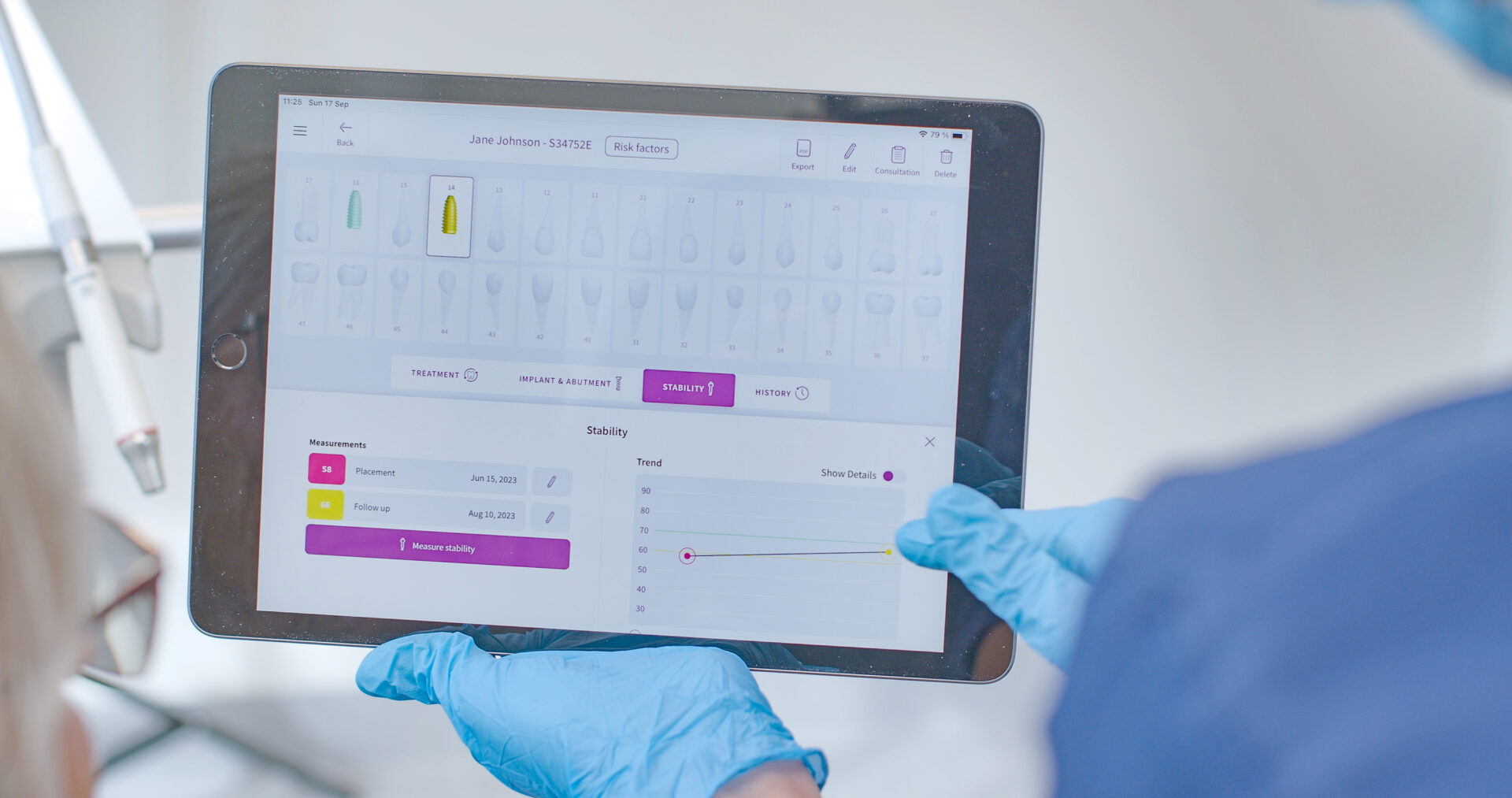
OsstellConnect is a cloud-based platform designed to support clinicians throughout the implant treatment journey. By combining ISQ measurements with structured planning tools and patient communication modules, it brings clarity and confidence to the decision-making process. Clinicians can feel reassured knowing that each decision they make is based on objective data and well-documented protocols – not guesswork.
How Dr Michael Norton uses OsstellConnect to guide implant decisions
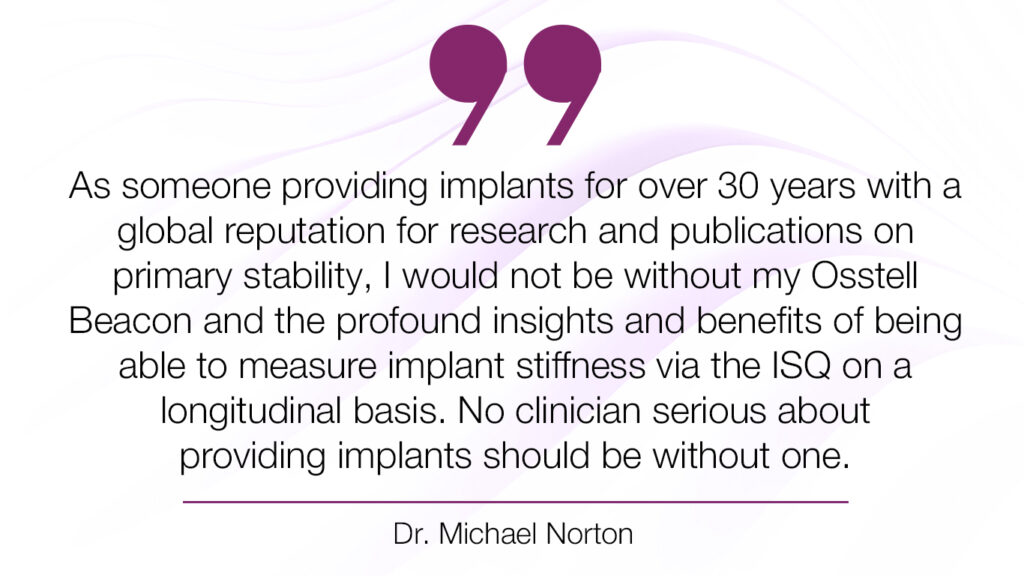
Dr Michael R. Norton, a renowned oral surgeon and past president of the Academy of Osseointegration, has long advocated for a more biologically respectful approach to implant dentistry. In his clinical practice, he challenges the widespread reliance on high insertion torque as a proxy for implant stability – a method he describes as “carpenter-like” and potentially harmful to peri-implant bone.
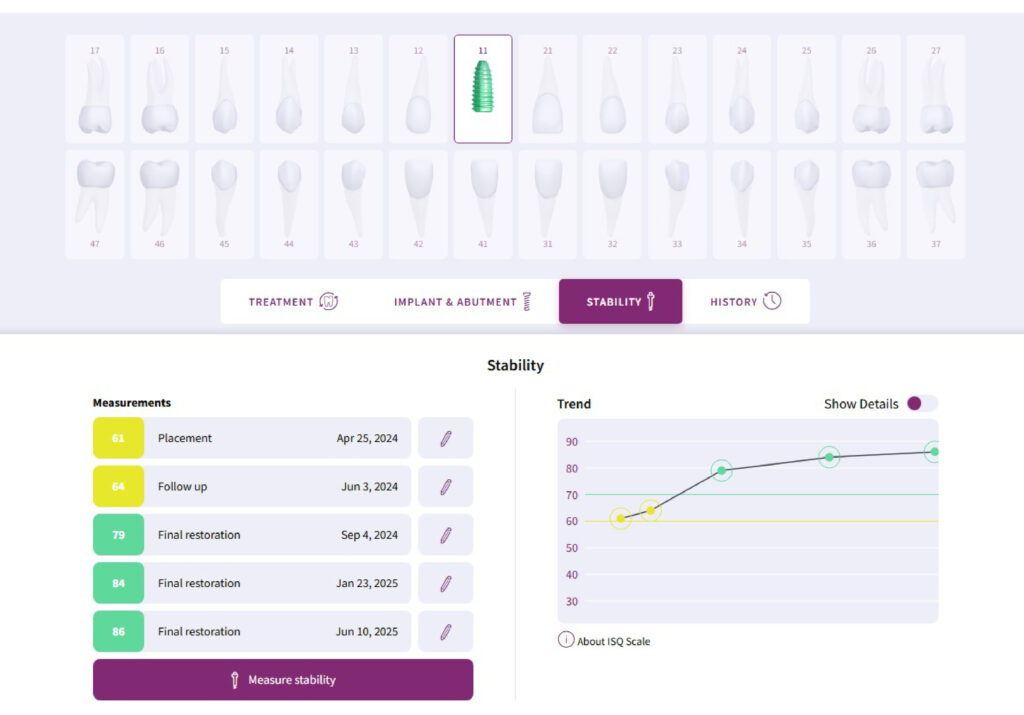
Instead, Dr Norton uses Resonance Frequency Analysis (RFA) and OsstellConnect to monitor implant stability over time. In a recent case involving a 37-year-old patient with a failing maxillary central incisor and a large periapical cyst, he placed an implant using a low insertion torque of just 20 Ncm. Despite the minimal mechanical engagement, the initial ISQ values of 61 and 65 indicated acceptable primary stability.
What followed was a textbook example of how longitudinal ISQ measurements can guide treatment decisions. Using OsstellConnect, Dr Norton tracked the implant’s stability over several months:
6 weeks: ISQ increased to 64/69
4 months: ISQ reached 79/82
9–12 months: ISQ plateaued at 85/86, confirming full biological integration
“Insertion torque is a one-off measure. It gives no insight into the biological process of healing. In contrast, RFA allows us to map the transition from primary to secondary stability and make informed decisions about when to restore.”
This clinical case was originally published in Implants – International Magazine of Oral Implantology, issue 3/25, pages 28–32. Used with permission. You can download the full case report here. You can download the full magazine here.
Beyond individual cases, Dr Norton sees OsstellConnect as a valuable clinical audit tool. It allows clinicians to document surgical protocols, risk factors, and ISQ trends – contributing to a growing body of knowledge that can improve implant outcomes globally.
How Dr Will Martin uses OsstellConnect to streamline clinical workflows
Dr Will Martin, Clinical Professor at the University of Florida and Director of the Center for Implant Dentistry, has integrated OsstellConnect deeply into both clinical practice and education. With a patient population ranging from routine cases to highly complex scenarios, his team relies on ISQ measurements to guide treatment decisions and improve predictability.
In his lecture at the Osstell ISQ Symposium, Dr Martin emphasized the value of longitudinal ISQ tracking – not just at placement, but throughout healing and follow-up. “When you have a trend in measurements over time, it gives you a story about the stability of the implant,” he explained. This data-driven approach allows clinicians to adjust treatment plans based on real-time biological feedback, rather than relying solely on insertion torque or intuition.
At the University of Florida, OsstellConnect is used to:
Track ISQ values over time for each implant
Document surgical protocols and risk factors
Educate patients and referrals using printable treatment and stability reports
Support student learning by linking clinical procedures with measurable outcomes
Dr Martin also highlighted the ConsultationTool within OsstellConnect as a powerful aid in patient communication. “It’s a non-threatening way to show treatment phases and timelines,” he said. “Patients often ask, ‘When will this be done?’ – and with this tool, we can visually guide them through each step.”
To streamline data entry, Dr Martin and his team at the University of Florida have developed chairside forms that are later uploaded manually to OsstellConnect. This approach ensures consistent documentation without disrupting clinical flow – a practical solution in an academic setting.
However, many clinicians prefer to take advantage of OsstellConnect’s integrated features, such as wireless transfer of ISQ values directly from the Beacon device, and the ability to scan implant packaging to automatically document REF and LOT numbers. This also enables SmartPeg Type guidance, helping clinicians select the correct component for each implant system.
Why Dr Stephen Chen believes ISQ is the benchmark for evidence-based implant dentistry
Dr Stephen Chen, past president of the ITI and a leading voice in implant dentistry across Asia-Pacific, has long advocated for a more nuanced understanding of implant stability. In his recent webinar, he cautioned against relying solely on insertion torque – especially with modern implant designs that can produce deceptively high values.
“High torque doesn’t necessarily mean high stability. And it certainly doesn’t mean the implant is ready to be loaded.”
Instead, Dr Chen highlights ISQ (Implant Stability Quotient) as a more reliable and repeatable method for monitoring implant stability over time. Unlike torque, ISQ values can be tracked throughout healing, helping clinicians detect the stability dip and make informed decisions about when – or whether – to load.
His emphasis on objective, longitudinal data reflects the core principles behind OsstellConnect – supporting clinicians with measurable insights that guide treatment decisions over time. You can watch Dr Chen’s full webinar here.
Why Dr Scott Ganz believes every clinician should measure ISQ
Dr Scott Ganz, a pioneer in digital dentistry and editor-in-chief of Cone Beam International, has long championed the use of objective data in implant treatment planning. In his lecture at the Osstell Symposium, he made a clear statement:
“There are two technologies that I feel are vital in the practice of implant dentistry. The first is 3D CBCT imaging and advanced treatment planning software, which form the initial diagnostic foundation; and the second is resonance frequency analysis (RFA), which brings us the Implant Stability Quotient or ISQ. Both are essential to achieve consistent and repeatable treatment outcomes.”
Dr Ganz uses ISQ measurements not only to assess primary stability, but to track implant integration over time. He emphasizes that insertion torque is a one-time, subjective value, while ISQ offers repeatable, longitudinal insights that support clinical decision-making. A strong advocate for OsstellConnect, Dr Ganz highlights its value in both clinical documentation and education. By saving ISQ values in the cloud, clinicians can monitor healing, share data with colleagues, and contribute to a growing body of evidence. “With OsstellConnect, we can share this data, we can collect this data, we can have meaningful discussions about that data.” Dr Ganz also sees OsstellConnect as a powerful tool for implant companies and universities, enabling large-scale data collection and analysis to improve outcomes and guide innovation. You can watch Dr Ganz’s full webinar here.
Conclusion: Why data matters
These expert perspectives – from Europe, North America and Australia – reflect a shared commitment to evidence-based implant dentistry. Whether through clinical audits, progressive loading protocols, or advanced digital workflows, each clinician demonstrates how ISQ data empowers better decisions and more predictable outcomes.
In implant dentistry, every decision counts – and every data point tells a story. From initial placement to final restoration, the ability to measure and monitor implant stability is no longer a luxury; it’s a necessity.
Platforms like OsstellConnect are transforming how clinicians work. By combining objective ISQ measurements with structured documentation and communication tools, they enable a more transparent, collaborative, and patient-centered approach to care. Data doesn’t just support individual decisions – it builds collective knowledge, strengthens clinical protocols, and drives innovation across the field.
“With OsstellConnect, we can share this data, we can collect this data, we can have meaningful discussions about that data.”
In a world where patients expect faster, safer, and more predictable treatments, data is the key to confidence – for clinicians, for patients, and for the future of implant dentistry.

Add comment