FAQ

Support

자주 묻는 질문

제품, ISQ 척도 및 사용 방법, OsstellConnect, Osstell 기술 등에 대해 자세히 알아보십시오.
Questions about Smartpegs

Questions about Smartpegs

Can the reusable SmartPeg be sterilised according to the Prion cycle?

Yes, it can be sterilised with a Prion cycle at 134 °C for 18 minutes.

How should I mount the SmartPeg on the implant?

Whether you are using a single-use or a reusable SmartPeg, it should always be installed using the SmartPeg Mount and tightened to approximately 4–6 Ncm – typically described as finger tight. This ensures proper seating and accurate ISQ measurements without risking damage to the implant or the SmartPeg.

Can I mix single-use and reusable SmartPegs in the same treatment session?

Yes. You can mix single-use and reusable SmartPegs during the same treatment session. The only requirement is that you use the correct SmartPeg Type number for the specific implant or abutment you are measuring.

Whether the SmartPeg is single-use or reusable does not affect the measurement.

Does a reusable SmartPeg provide the same ISQ values as a single use SmartPeg?

Yes, as long as its integrity and performance are maintained.

Osstell is also the only company offering both a sterile single-use and a reusable SmartPeg made of aluminium, supported by more than 1,500 published studies on the ISQ method.

With the Osstell original ISQ scale and SmartPegs, no conversion tables or correction factors are needed. The measured ISQ value is the true value, regardless of whether you use a single use or a reusable SmartPeg.

How are the different SmartPegs packed?

SmartPegs are supplied in different packaging formats depending on whether they are single-use or reusable:

Single-use SmartPegs

  • Delivered sterile.
  • Supplied in boxes of 5 pieces, in a single sterile barrier system with protective outer packaging.
  • Intended for one treatment session only and must not be reused.

Reusable SmartPegs

  • Delivered nonsterile in individual packaging.
  • Must be cleaned, disinfected and sterilized before the first clinical use and after every subsequent use. (See quickguide at osstell/ifu).

SmartPeg Mount

  • Delivered nonsterile with the instrument.
  • Can be purchased separately, in package of 5.
  • Must also be cleaned, disinfected and sterilized before use and between patients. (See quickguide at osstell/ifu).
Is there a visual difference between the single-use and reusable SmartPeg?

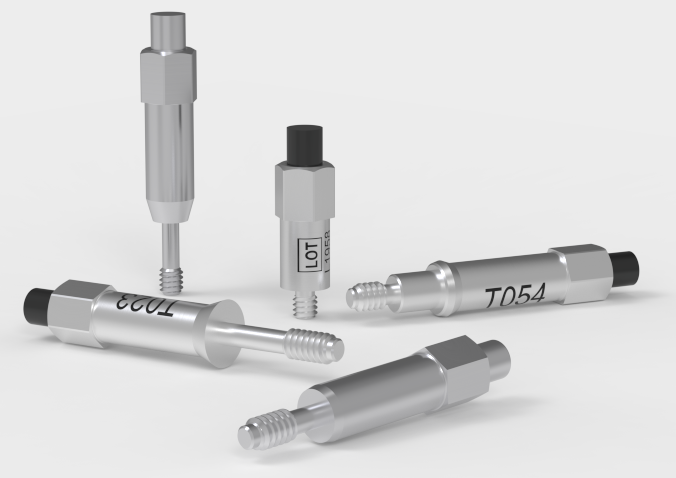
Yes. The reusable and single use SmartPegs are designed so they can be easily distinguished visually:

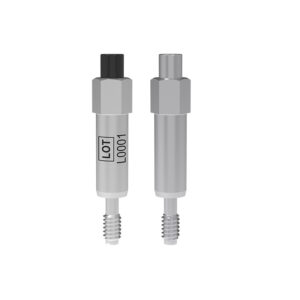
  • The single-use SmartPeg is supplied sterile, has an aluminium coloured (non coloured) magnet, and does not include any laser marked identifiers on the body.
  • The reusable SmartPeg has a black magnet on top and carries laser marked Type and LOT numbers on the body for identification and traceability.
How many times can the SmartPeg be used?

The reusable SmartPeg can be used for up to 20 reprocessing cycles, as long as its integrity and performance are maintained.

If inspection reveals wear, deformation, corrosion, damaged threads, or any loss of functional compatibility, the SmartPeg must be discarded, even if it has been processed fewer than 20 times.

The single-use SmartPeg is intended for one treatment session only and must not be reprocessed.

Why can the reusable SmartPeg be cleaned and sterilised when the single-use SmartPeg cannot, even though both are made of aluminium?

The reusable SmartPeg is engineered with special protective surface coating – one on the SmartPeg body and another black protective coating on the magnet. These coatings provide resistance to moisture, cleaning chemicals, wear, and corrosion, ensuring that the SmartPeg maintains its performance throughout the validated number of reprocessing cycles.

The reusable SmartPeg can easily be distinguished from the single use version: it has a black magnet, and its LOT and Type number are laser marked on the body for clear identification.

How should the reusable SmartPeg and the SmartPeg Mount be cleaned and sterilized?

Prior to the first clinical use, and after each use the reusable products must be cleaned, disinfected and sterilized according to the instructions in the quickguide that is found here: Osstell/ifu

How do I measure and record ISQ on an abutment?

You can record ISQ at abutment level in OsstellConnect, but it is important to follow the correct clinical measurement procedure to obtain accurate values.

How to measure ISQ at abutment level

  1. Perform an implant level measurement first, before placing the abutment.
  2. Measure again at abutment level during the same session, using a SmartPeg made for abutment level measuring.
  3. Determine the offset by noting the difference between implant level and abutment level ISQ. This offset remains stable throughout healing and should be used when interpreting follow-up measurements.
  4. For all subsequent visits, measure on the abutment and apply the same offset to understand the true implant ISQ.

How to record the measurement in OsstellConnect:

  1. Go to the patient’s register, select the patient and the implant in the tooth chart. Click ‘Add abutment’, choose the abutment, and save.
  2. Select ‘Measure stability’ and choose ‘Abutment’ under Measurement level. Measure on the abutment as you would at implant level and save.
  3. To review the stability trend, open the Stability tab and toggle ‘Show abutment’. You can also enable ‘Show details’ to view buccal–lingual and mesial–distal ISQ values.

For a more detailed explanation and clinical guidance, see our blog post here.

Why do I need to take two measurements at the same occasion?

ISQ should always be measured in two directions, because implant stability can vary depending on the amount of surrounding bone in different directions. Measuring from two angles ensures that both the most and the least stable directions are captured.
To do this, take one measurement in the buccal-lingual direction and one in the mesial-distal direction. These two ISQ values represent the different stability directions. Sometimes the values are identical; sometimes they differ.
If the two measurements differ, always rely on the lowest ISQ value, as it reflects the weakest direction and therefore provides the most clinically relevant information about implant stability.

Are there any studies that prove the Osstell method?

There are currently thousands of articles where Osstell was used in the study, published in scientific papers. These abstracts could be found in our searchable database under “Resources/Scientific database“.

The Osstell ISQ scale is based on outcomes from these studies, all performed using Osstell instruments and aluminium SmartPegs.

Do I need a torque device to tighten the SmartPeg correctly?

No. A torque device should not be used to tighten the SmartPeg.

SmartPegs should always be mounted using the SmartPeg Mount and tightened to approximately 4–6 Ncm, which is typically described as finger tight.

This ensures the SmartPeg is seated correctly without risking damage to the implant connection.

How does the Osstell technology work?

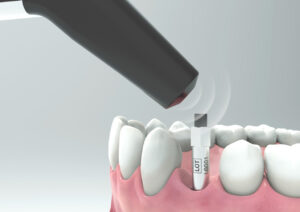
Osstell measures implant stability using Resonance Frequency Analysis (RFA). The small SmartPeg that you attach to the implant has a tiny magnet on top. When the probe sends magnetic pulses, the SmartPeg starts to vibrate – similar to a very small tuning fork.
How it works:

  1. The instrument tip sends magnetic pulses
    These pulses make the SmartPeg vibrate without touching it.
  2. The vibration changes depending on how stable the implant is
    – A stable implant (good bone support) makes the SmartPeg vibrate faster.
    – A less stable implant makes it vibrate slower.
  3. The device converts this vibration into an ISQ value
    – Higher stability → higher frequency → higher ISQ
    – Lower stability → lower frequency → lower ISQ

It takes less than a second, and the ISQ value is shown immediately.

Does the way the SmartPeg is tightened affect the ISQ value?

Yes. The ISQ value can be affected if the SmartPeg is not mounted correctly.

For accurate measurements, the SmartPeg should be attached finger tight using the SmartPeg Mount, which corresponds to about 4–6 Ncm.

At this level, the SmartPeg has firm, stable contact with the implant, and the resulting ISQ value is consistent – typically within ±2 ISQ units.

  • If the SmartPeg is not fully seated:
    The contact becomes unstable, and the ISQ value can appear artificially low, or you don’t receive any value.
  • If too much force is applied:
    Overtightening does not improve accuracy. It may damage the SmartPeg threads.
    – A reusable SmartPeg may be damaged so it cannot be used again.
    – A single use or reusable SmartPeg may have its threads deformed, which can lead to inaccurate measurements during that session or, in worst case a broken SmartPeg.

In short: finger tight (4–5 Ncm) is enough to ensure stable contact and reliable ISQ readings.

What should I do if no ISQ value is displayed?

If no ISQ value appears, it usually means the SmartPeg’s vibration is not being detected clearly by the instrument. Several factors can cause this, and most are easy to resolve:

  1. Distance to instrument is too great
    The instrument should normally be held 2–4 mm from the magnet on top of the SmartPeg. Do not touch the magnet. If no value appears, move the instrument closer until the signal is detected.
  2. Angle needs adjustment
    The magnetic field is directional, so the orientation of the instrument matters. Measurements should be taken at approximately a 45° angle relative to the top of the SmartPeg.
  3. Ensure you have the correct SmartPeg Type for the specific implant
    Use this link to find the correct SmartPeg Type: Find my SmartPeg
  4. Soft tissue damping
    Surrounding tissue can sometimes dampen the vibration more than expected. Holding the instrument a bit closer usually compensates for this.
  5. The implant platform is not clean
    Ensure the implant platform is clean and free of debris, so the SmartPeg seats properly and transmits its vibration.
  6. The SmartPeg is worn or damaged
    • If you are using a reusable SmartPeg, make sure it has been inspected before use and that it is within 20 reprocessing cycles. A reusable SmartPeg that is worn out, bent, or has damaged threads will not vibrate correctly — and the instrument may not be able to pick up a reading.
    • A single‑use SmartPeg is intended for one treatment session only.
    • Ensure the SmartPeg is properly seated on the implant and that it is not in contact with surrounding tissue, as this can prevent accurate signal detection and may result in no ISQ value or an incorrect one.
  7. Electromagnetic interference
    Strong electromagnetic noise sources nearby may disturb the measurement. (See the FAQ on “Electromagnetic noise” for details.)
Which Osstell products can be autoclaved?

The following products may be autoclaved (over-pressurized steam up to 135 deg Celsius):

  • SmartPeg Mount
  • Reusable SmartPeg
  • Probe (IDx)

Please note that single-use SmartPegs are disposable and cannot be autoclaved!

How do I select the correct SmartPeg for my implant?

Different implants require specific SmartPegs to ensure accurate measurement. Each SmartPeg is matched to a particular implant system and connection type.

You can find the correct SmartPeg for your implant in the SmartPeg Reference Guide – click here to access it.

Questions about the Osstell Beacon

Questions about the Osstell Beacon

Osstell Classic의 보증 기간은 얼마나 됩니까?

1년입니다.

Osstell Classic을 어떻게 세척합니까?

사용 전마다 권장 표면 세정제(아래 목록 참조)를 거즈 또는 부드러운 천에 적셔 기구 전체를 닦습니다.

허용되는 세정제:

  • 이소프로필 알코올 70%
  • 저발포성 중성 pH 효소 세척제(예):
    • BePro Disinfectant Wipes, REF 19500102, www.wh.com (W&H Sterilization에서 주문 가능)
    • Medizime LF
    • Enzol

사용 금지:

  • 산성 또는 페놀 기반 세정제/소독제
  • 손 세정제나 식기 세정제를 포함한 모든 종류의 강알칼리 세정제
  • 표백제 기반 세정제
  • 과산화수소 기반 세정제
  • 연마성 세정제
  • 아세톤 또는 탄화수소 기반 세정제
  • MEK(메틸에틸케톤)
  • Birex
  • 글루타르알데하이드
  • 4차 암모늄 염화물염 기반 세정제

본 기구는 정기적인 유지보수가 필요하지 않습니다. 기구에 이상이 발생하면 현지 영업 담당자 또는 유통업체에 문의하여 안내를 받으십시오.

How do I measure and record ISQ on an abutment?

You can record ISQ at abutment level in OsstellConnect, but it is important to follow the correct clinical measurement procedure to obtain accurate values.

How to measure ISQ at abutment level

  1. Perform an implant level measurement first, before placing the abutment.
  2. Measure again at abutment level during the same session, using a SmartPeg made for abutment level measuring.
  3. Determine the offset by noting the difference between implant level and abutment level ISQ. This offset remains stable throughout healing and should be used when interpreting follow-up measurements.
  4. For all subsequent visits, measure on the abutment and apply the same offset to understand the true implant ISQ.

How to record the measurement in OsstellConnect:

  1. Go to the patient’s register, select the patient and the implant in the tooth chart. Click ‘Add abutment’, choose the abutment, and save.
  2. Select ‘Measure stability’ and choose ‘Abutment’ under Measurement level. Measure on the abutment as you would at implant level and save.
  3. To review the stability trend, open the Stability tab and toggle ‘Show abutment’. You can also enable ‘Show details’ to view buccal–lingual and mesial–distal ISQ values.

For a more detailed explanation and clinical guidance, see our blog post here.

How can I find the serial number (SN)?

You can find the serial number on the back of your instrument.

How can I find my registration code?

Osstell Beacon
• To find your registration code, please make sure that you have already installed the Beacon Gateway. If you have not installed it yet, please navigate to your clinic in your account, click the instruments tab and download the gateway. Install it.
• Take your instrument in hand. It is now connecting to OsstellConnect and you should see a symbol animating. Please note that it can take a few seconds.
• When connected, the symbol stops animating.
• The registration code is now displayed on the lower screen of your instrument.

Osstell IDx
• When turning on your Osstell IDx for the first time, you will be prompted to select language, time zone, date and time.
• After that, you will need to set up a 4-digit pin code and a backup password. The backup password is needed when restoring to a backup, so please note it down and save it in a safe place.
• Your registration code is now displayed on your Osstell IDx.

How do I get started?

Start by charging the instrument for about 3 hours to ensure optimal performance.

The Osstell Beacon starts automatically when moved, shows the battery status, and is then ready for measurement in the BL (buccal-lingual) direction.

Bring the instrument close to a SmartPeg or TestPeg to start measuring. An audible signal confirms the measurement, and the ISQ value is shown together with a coloured stability indication (red, yellow, green).

At start-up, an OsstellConnect code is displayed until the instrument is registered. You can register your instrument here: Register to OsstellConnect.

The instrument turns off automatically after 60 seconds without movement.

How do I measure with the Osstell Beacon?

Video on how to measure: Measure with Osstell Beacon

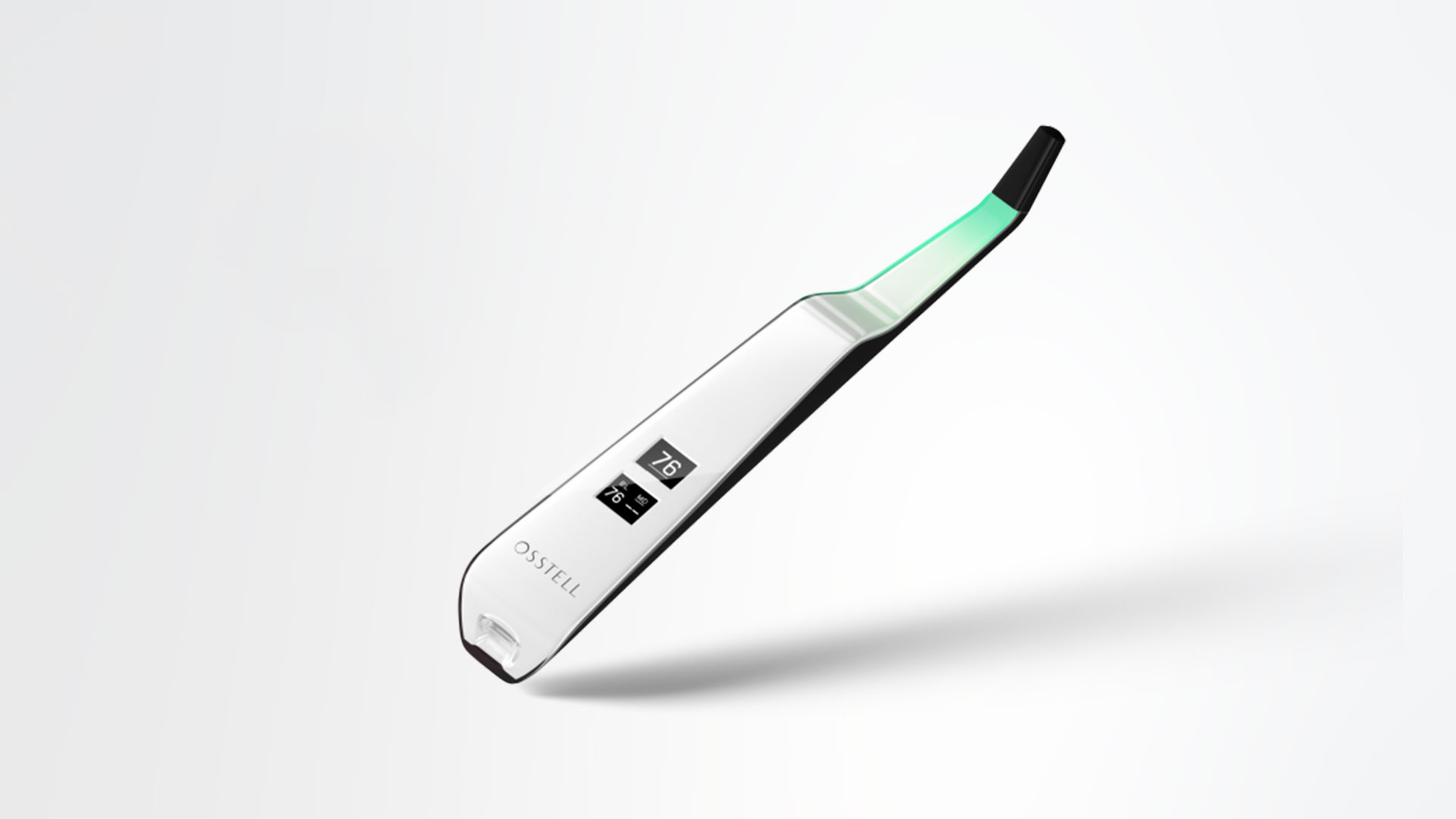
1. Activate the Osstell Beacon by picking it up. The instrument will start-up and after showing the battery status, the instrument will be ready for measurement in the BL (Buccal – Lingual) direction, which is prompted in the upper display as well as optimal angle towards the Smartpeg.

2. Place a barrier sleeve over the Osstell beacon instrument.

3. Place the SmartPeg into the SmartPeg Mount. The SmartPeg is magnetic, and the SmartPeg Mount will hold the SmartPeg. See fig 2. Attach the SmartPeg to the implant or abutment by screwing the SmartPeg Mount using finger force of approximately 4-6 Ncm. Do not over-tighten, to avoid damaging the SmartPeg threads.

4. Hold the instrument tip close (2-4mm) to the top of the SmartPeg without touching it. Sometimes, you will need to go as close as 1 mm. An audible sound indicates when measurement has started, and measured data will be shown in the upper display combined with a colored light indication below the tip.

5. Bring the instrument out of the mouth to clearly read the ISQ value and the colored indication. The measured ISQ values will be displayed in the upper display for a couple of seconds and then switch to be ready for measurement in mesial-distal direction.

6. Repeat step 4 and the sequence starts over and the Osstell Beacon is ready for measurement in the BL (Buccal- Lingual) direction again.

7. When all measurements are performed, remove the SmartPeg by using the SmartPeg Mount. The instrument is automatically turned off after 60 seconds of inactivity.

측정했을 때 예상하지 못한 값이 나오거나 판독값을 읽을 수 없는 이유는 무엇입니까?

가능한 원인:


SmartPeg 재사용: SmartPeg은 일회용으로, 한 번의 치료 세션 동안 한 명의 환자에 대해 한 번 또는 여러 번의 측정에만 사용해야 합니다. 반복 재사용 시 연성 알루미늄 SmartPeg 나사산의 마모로 잘못된 판독값이 나올 수 있습니다.

임플란트에 맞지 않는 SmartPeg 유형 선택: SmartPeg 참조 목록(osstell.com/smartpegguide)을 확인하십시오.

SmartPeg와 임플란트 사이의 뼈 또는 연조직: SmartPeg 부착 전 임플란트 보철 연결부를 깨끗이 세정하십시오.

전자기 간섭: 전자기 간섭 원인을 제거하십시오.

프로브 거리 과다: 프로브를 SmartPeg에서 2–4 mm 떨어져 유지하십시오.

How do I get started?

Although it is possible to use the Osstell Beacon directly, depending on the status of the built-in rechargeable battery, it is recommended to charge the battery for at least 3 hours before using the Osstell Beacon instrument.

The Osstell Beacon is activated by a built-in motion sensor. As soon as the motion sensor detects movement, the Osstell Beacon will start-up and shortly show battery status and then be ready for measurement in the BL (Buccal – Lingual) direction, which is indicated in the upper display.

The Osstell Beacon will start to measure, indicated by an audible sound, when near an Osstell SmartPeg or Test peg due to a built-in magnetic detector that senses the magnet on the top of the Osstell SmartPeg/TestPeg. Measured data will be shown in the upper display combined with a colored light indication below the tip.

The red, yellow and green color indicates if the measured ISQ value corresponds to a low, medium or high implant stability according to the ISQ scale guidance, click here for more information.

After 60 seconds of no motion, the Osstell Beacon will turn off automatically.

How do I measure with the Osstell Beacon?

1. Activate the Osstell Beacon by picking it up. The instrument will start-up and after showing the battery status, the instrument will be ready for measurement in the BL (Buccal – Lingual) direction, which is prompted in the upper display as well as optimal angle towards the Smartpeg.

2. Place a barrier sleeve over the Osstell beacon instrument.

3. Place the SmartPeg into the SmartPeg Mount. The SmartPeg is magnetic, and the SmartPeg Mount will hold the SmartPeg. See fig 2. Attach the SmartPeg to the implant or abutment by screwing the SmartPeg Mount using finger force of approximately 4-6 Ncm. Do not over-tighten, to avoid damaging the SmartPeg threads.

4. Hold the instrument tip close (2-4mm) to the top of the SmartPeg without touching it. Sometimes, you will need to go as close as 1 mm. An audible sound indicates when measurement has started, and measured data will be shown in the upper display combined with a colored light indication below the tip.

5. Bring the instrument out of the mouth to clearly read the ISQ value and the colored indication. The measured ISQ values will be displayed in the upper display for a couple of seconds and then switch to be ready for measurement in mesial-distal direction.

6. Repeat step 4 and the sequence starts over and the Osstell Beacon is ready for measurement in the BL (Buccal- Lingual) direction again.

7. When all measurements are performed, remove the SmartPeg by using the SmartPeg Mount. The instrument is automatically turned off after 60 seconds of inactivity.

Why is it that I get unexpected values or no readings when measuring?

Possible explanations include:

Re-Used SmartPeg: The SmartPegs are disposable and should only be used for one or multiple measurement at one treatment session, for a single patient only. Repeated re-use may result in false readings due to wear and tear of the soft aluminum SmartPeg threads.

Wrong SmartPeg type selected for the implant: See SmartPeg reference list, osstell.com/smartpegguide

Bone or soft tissue in between SmartPeg and Implant: Make sure to clean the Implant prosthetic connection before attaching the SmartPeg.

Electromagnetic interference: Remove the source of electromagnetic interference.

Probe is held too far away from the SmartPeg: Hold the probe 2-4 mm away from the SmartPeg.

Do I need to be connected to WiFi?

You can have your Osstell Beacon online connected to OsstellConnect for data collection, but it is not a requirement. OsstellConnect is an online tool for statistical analysis and valuable insights based on your data. Before you can start using data connection to OsstellConnect you have to register your Osstell Beacon. The serial number can be found on the back of the instrument. For registration assistance and features of data connection to OsstellConnect, please visit osstellconnect.com/beacon

What is the warranty on the Osstell Beacon?

2 years

How do I clean the Osstell Beacon?

Before each use, moisten a gauze or soft cloth with an acceptable (see list below) surface disinfectant and wipe the whole Osstell Beacon instrument. Note! Do not autoclave the Osstell Beacon instrument. Routinely check the surface of the instrument tip and overall surface for possible cracks and resins.

Acceptable Cleaners:
o Isopropyl alcohol
o Ethyl alcohol-based cleaners

Do not use:
o Strong alkali detergent of any type, including hand soaps and dish soaps Bleach based cleaners
o Hydrogen Peroxide based cleaners Abrasive Cleansers
o Acetone or hydrocarbon based cleaners MEK (Methyl Ethyl Ketone)
o Birex Gluteraldehyde
o Quaternary Ammonium Chloride salt-based cleaners

How do I engage / disengage transportation mode?

The Osstell Beacon is delivered from factory in a “transport” mode, where the built-in motion sensor is deactivated. To deactivate the transport mode and start charging, connect the small USB connector of the Osstell USB cable to wide end of the instrument. Connect the large USB connector to a standard USB outlet of a PC, laptop or charger.

Do I need to be connected to Wi‑Fi?

No, a Wi‑Fi connection is not required to use your Osstell Beacon. You can measure implant stability and document ISQ values manually in your patient journal or in OsstellConnect at a later stage.
If connected, the Osstell Beacon can communicate wirelessly with OsstellConnect, allowing measurements to be transferred and recorded automatically.
OsstellConnect is an online tool used for data collection, statistical analysis and clinical insights based on your measurements.
To use the data connection, your Osstell Beacon must first be registered. The serial number can be found on the back of the instrument. For registration guidance and more information, please visit https://osstellconnect.com/register

How do I switch the Osstell Beacon from transport mode to use mode?

The Osstell Beacon is delivered in transportation mode with the motion sensor deactivated. To switch modes, briefly connect the USB cable to the instrument and a USB port on a computer for a few seconds, then disconnect.

What should I do if the Osstell Beacon doesn’t start or when the display is showing a wrench and a manual?

Charge the Beacon for at least 30 min in room temperature, then try again. If the error remains, try resetting the device by:

1. Identify the Beacon reset pin on the picture below.

2. With a paper clip, do a gentle press for 1 second on the reset button (Note! You may have to tilt the pin a little downwards).
If you see a “PadLock” symbol in the upper display, press one more time on the reset button.


If the Beacon still doesn’t start or the display is showing a wrench and a manual, then please contact your local sales representative or distributor or support@osstell.com.

Why do I need to take two measurements at the same occasion?

ISQ should always be measured in two directions, because implant stability can vary depending on the amount of surrounding bone in different directions. Measuring from two angles ensures that both the most and the least stable directions are captured.
To do this, take one measurement in the buccal-lingual direction and one in the mesial-distal direction. These two ISQ values represent the different stability directions. Sometimes the values are identical; sometimes they differ.
If the two measurements differ, always rely on the lowest ISQ value, as it reflects the weakest direction and therefore provides the most clinically relevant information about implant stability.

Are there any studies that prove the Osstell method?

There are currently thousands of articles where Osstell was used in the study, published in scientific papers. These abstracts could be found in our searchable database under “Resources/Scientific database“.

The Osstell ISQ scale is based on outcomes from these studies, all performed using Osstell instruments and aluminium SmartPegs.

How does the Osstell technology work?

Osstell measures implant stability using Resonance Frequency Analysis (RFA). The small SmartPeg that you attach to the implant has a tiny magnet on top. When the probe sends magnetic pulses, the SmartPeg starts to vibrate – similar to a very small tuning fork.
How it works:

  1. The instrument tip sends magnetic pulses
    These pulses make the SmartPeg vibrate without touching it.
  2. The vibration changes depending on how stable the implant is
    – A stable implant (good bone support) makes the SmartPeg vibrate faster.
    – A less stable implant makes it vibrate slower.
  3. The device converts this vibration into an ISQ value
    – Higher stability → higher frequency → higher ISQ
    – Lower stability → lower frequency → lower ISQ

It takes less than a second, and the ISQ value is shown immediately.

What should I do if no ISQ value is displayed?

If no ISQ value appears, it usually means the SmartPeg’s vibration is not being detected clearly by the instrument. Several factors can cause this, and most are easy to resolve:

  1. Distance to instrument is too great
    The instrument should normally be held 2–4 mm from the magnet on top of the SmartPeg. Do not touch the magnet. If no value appears, move the instrument closer until the signal is detected.
  2. Angle needs adjustment
    The magnetic field is directional, so the orientation of the instrument matters. Measurements should be taken at approximately a 45° angle relative to the top of the SmartPeg.
  3. Ensure you have the correct SmartPeg Type for the specific implant
    Use this link to find the correct SmartPeg Type: Find my SmartPeg
  4. Soft tissue damping
    Surrounding tissue can sometimes dampen the vibration more than expected. Holding the instrument a bit closer usually compensates for this.
  5. The implant platform is not clean
    Ensure the implant platform is clean and free of debris, so the SmartPeg seats properly and transmits its vibration.
  6. The SmartPeg is worn or damaged
    • If you are using a reusable SmartPeg, make sure it has been inspected before use and that it is within 20 reprocessing cycles. A reusable SmartPeg that is worn out, bent, or has damaged threads will not vibrate correctly — and the instrument may not be able to pick up a reading.
    • A single‑use SmartPeg is intended for one treatment session only.
    • Ensure the SmartPeg is properly seated on the implant and that it is not in contact with surrounding tissue, as this can prevent accurate signal detection and may result in no ISQ value or an incorrect one.
  7. Electromagnetic interference
    Strong electromagnetic noise sources nearby may disturb the measurement. (See the FAQ on “Electromagnetic noise” for details.)
Does using the Osstell instrument affect the implant?

No. The Osstell measurement does not affect the implant. The instrument only makes the SmartPeg vibrate. The SmartPeg’s magnet is activated by very low energy magnetic pulses generated by the instrument. The technique is objective, gentle, and highly repeatable

Can I measure ISQ on a patient with a pacemaker?

Yes, ISQ measurements can be performed on patients with a pacemaker.
As a precaution, the probe should be kept away from the chest area where the pacemaker is located, due to the magnetic pulses emitted during measurement.
There are published reports regarding pacemakers and magnetic fields for further reference.

When should I measure implant stability?

Implant stability can be measured at different stages of treatment.
It is typically measured at implant placement to establish a baseline, and then during healing to monitor changes in stability and osseointegration. A final measurement is often taken before loading to support the decision.
Repeated measurements over time provide valuable information, as the trend in ISQ values helps guide clinical decisions.

Osstell Classic

Osstell Classic 관련 질문

Osstell Classic의 보증 기간은 얼마나 됩니까?

1년입니다.

Osstell Classic으로 어떻게 측정합니까?

환자에게 사용하기 전에 기구 위에 차단 슬리브를 놓습니다. 차단 슬리브는 교차 오염을 방지하고, 치과용 복합 재료가 기구 팁과 본체의 표면에 달라붙는 것을 방지하며, 세정액으로 인한 변색 및 열화를 방지하는 데 도움이 됩니다.

참고

  • 차단 슬리브는 환자 1인 전용입니다.
  • 각 환자에게 사용한 뒤 차단 슬리브는 표준 폐기물로 폐기하십시오.
  • 차단 슬리브를 장기간 동안 기구 위에 놓아두지 마십시오.
  • 권장 차단 슬리브는 아래를 참조하십시오.
    • TIDIShield, Art no: 20808, Art no: 20987. tidiproducts.com
    • PremiumPlus: 183-2 X-선 센서 슬리브, 크기 2
  • 각 환자 사용 후 반드시 적절한 제제로 기구를 세정해야 합니다.
  • 치유 과정 전반의 향후 측정을 위한 기준값을 얻기 위해 임플란트 식립 시 첫 번째 측정을 해야 합니다. 최종 보철 전 다시 측정하면 임플란트 안정성의 변화를 확인할 수 있습니다.
  • 가장 낮은 안정성을 찾기 위해 협설측(Buccal-Lingual)과 근원심(Mesial-Distal) 두 방향에서 측정하는 것이 권장됩니다. 따라서 기구는 두 방향 측정을 안내합니다.
  • 여기를 클릭하여 측정 방법 동영상을 확인하십시오.
Osstell Classic을 어떻게 세척합니까?

사용 전마다 권장 표면 세정제(아래 목록 참조)를 거즈 또는 부드러운 천에 적셔 기구 전체를 닦습니다.

허용되는 세정제:

  • 이소프로필 알코올 70%
  • 저발포성 중성 pH 효소 세척제(예):
    • BePro Disinfectant Wipes, REF 19500102, www.wh.com (W&H Sterilization에서 주문 가능)
    • Medizime LF
    • Enzol

사용 금지:

  • 산성 또는 페놀 기반 세정제/소독제
  • 손 세정제나 식기 세정제를 포함한 모든 종류의 강알칼리 세정제
  • 표백제 기반 세정제
  • 과산화수소 기반 세정제
  • 연마성 세정제
  • 아세톤 또는 탄화수소 기반 세정제
  • MEK(메틸에틸케톤)
  • Birex
  • 글루타르알데하이드
  • 4차 암모늄 염화물염 기반 세정제

본 기구는 정기적인 유지보수가 필요하지 않습니다. 기구에 이상이 발생하면 현지 영업 담당자 또는 유통업체에 문의하여 안내를 받으십시오.

How do I measure and record ISQ on an abutment?

You can record ISQ at abutment level in OsstellConnect, but it is important to follow the correct clinical measurement procedure to obtain accurate values.

How to measure ISQ at abutment level

  1. Perform an implant level measurement first, before placing the abutment.
  2. Measure again at abutment level during the same session, using a SmartPeg made for abutment level measuring.
  3. Determine the offset by noting the difference between implant level and abutment level ISQ. This offset remains stable throughout healing and should be used when interpreting follow-up measurements.
  4. For all subsequent visits, measure on the abutment and apply the same offset to understand the true implant ISQ.

How to record the measurement in OsstellConnect:

  1. Go to the patient’s register, select the patient and the implant in the tooth chart. Click ‘Add abutment’, choose the abutment, and save.
  2. Select ‘Measure stability’ and choose ‘Abutment’ under Measurement level. Measure on the abutment as you would at implant level and save.
  3. To review the stability trend, open the Stability tab and toggle ‘Show abutment’. You can also enable ‘Show details’ to view buccal–lingual and mesial–distal ISQ values.

For a more detailed explanation and clinical guidance, see our blog post here.

How can I find the serial number (SN)?

You can find the serial number on the back of your instrument.

측정했을 때 예상하지 못한 값이 나오거나 판독값을 읽을 수 없는 이유는 무엇입니까?

가능한 원인:


SmartPeg 재사용: SmartPeg은 일회용으로, 한 번의 치료 세션 동안 한 명의 환자에 대해 한 번 또는 여러 번의 측정에만 사용해야 합니다. 반복 재사용 시 연성 알루미늄 SmartPeg 나사산의 마모로 잘못된 판독값이 나올 수 있습니다.

임플란트에 맞지 않는 SmartPeg 유형 선택: SmartPeg 참조 목록(osstell.com/smartpegguide)을 확인하십시오.

SmartPeg와 임플란트 사이의 뼈 또는 연조직: SmartPeg 부착 전 임플란트 보철 연결부를 깨끗이 세정하십시오.

전자기 간섭: 전자기 간섭 원인을 제거하십시오.

프로브 거리 과다: 프로브를 SmartPeg에서 2–4 mm 떨어져 유지하십시오.

Why do I need to take two measurements at the same occasion?

ISQ should always be measured in two directions, because implant stability can vary depending on the amount of surrounding bone in different directions. Measuring from two angles ensures that both the most and the least stable directions are captured.
To do this, take one measurement in the buccal-lingual direction and one in the mesial-distal direction. These two ISQ values represent the different stability directions. Sometimes the values are identical; sometimes they differ.
If the two measurements differ, always rely on the lowest ISQ value, as it reflects the weakest direction and therefore provides the most clinically relevant information about implant stability.

Are there any studies that prove the Osstell method?

There are currently thousands of articles where Osstell was used in the study, published in scientific papers. These abstracts could be found in our searchable database under “Resources/Scientific database“.

The Osstell ISQ scale is based on outcomes from these studies, all performed using Osstell instruments and aluminium SmartPegs.

How does the Osstell technology work?

Osstell measures implant stability using Resonance Frequency Analysis (RFA). The small SmartPeg that you attach to the implant has a tiny magnet on top. When the probe sends magnetic pulses, the SmartPeg starts to vibrate – similar to a very small tuning fork.
How it works:

  1. The instrument tip sends magnetic pulses
    These pulses make the SmartPeg vibrate without touching it.
  2. The vibration changes depending on how stable the implant is
    – A stable implant (good bone support) makes the SmartPeg vibrate faster.
    – A less stable implant makes it vibrate slower.
  3. The device converts this vibration into an ISQ value
    – Higher stability → higher frequency → higher ISQ
    – Lower stability → lower frequency → lower ISQ

It takes less than a second, and the ISQ value is shown immediately.

What should I do if no ISQ value is displayed?

If no ISQ value appears, it usually means the SmartPeg’s vibration is not being detected clearly by the instrument. Several factors can cause this, and most are easy to resolve:

  1. Distance to instrument is too great
    The instrument should normally be held 2–4 mm from the magnet on top of the SmartPeg. Do not touch the magnet. If no value appears, move the instrument closer until the signal is detected.
  2. Angle needs adjustment
    The magnetic field is directional, so the orientation of the instrument matters. Measurements should be taken at approximately a 45° angle relative to the top of the SmartPeg.
  3. Ensure you have the correct SmartPeg Type for the specific implant
    Use this link to find the correct SmartPeg Type: Find my SmartPeg
  4. Soft tissue damping
    Surrounding tissue can sometimes dampen the vibration more than expected. Holding the instrument a bit closer usually compensates for this.
  5. The implant platform is not clean
    Ensure the implant platform is clean and free of debris, so the SmartPeg seats properly and transmits its vibration.
  6. The SmartPeg is worn or damaged
    • If you are using a reusable SmartPeg, make sure it has been inspected before use and that it is within 20 reprocessing cycles. A reusable SmartPeg that is worn out, bent, or has damaged threads will not vibrate correctly — and the instrument may not be able to pick up a reading.
    • A single‑use SmartPeg is intended for one treatment session only.
    • Ensure the SmartPeg is properly seated on the implant and that it is not in contact with surrounding tissue, as this can prevent accurate signal detection and may result in no ISQ value or an incorrect one.
  7. Electromagnetic interference
    Strong electromagnetic noise sources nearby may disturb the measurement. (See the FAQ on “Electromagnetic noise” for details.)
Does using the Osstell instrument affect the implant?

No. The Osstell measurement does not affect the implant. The instrument only makes the SmartPeg vibrate. The SmartPeg’s magnet is activated by very low energy magnetic pulses generated by the instrument. The technique is objective, gentle, and highly repeatable

Can I measure ISQ on a patient with a pacemaker?

Yes, ISQ measurements can be performed on patients with a pacemaker.
As a precaution, the probe should be kept away from the chest area where the pacemaker is located, due to the magnetic pulses emitted during measurement.
There are published reports regarding pacemakers and magnetic fields for further reference.

When should I measure implant stability?

Implant stability can be measured at different stages of treatment.
It is typically measured at implant placement to establish a baseline, and then during healing to monitor changes in stability and osseointegration. A final measurement is often taken before loading to support the decision.
Repeated measurements over time provide valuable information, as the trend in ISQ values helps guide clinical decisions.

치의학 분야에서의 골유착에 대한 이해

치의학 분야에서의 골유착에 대한 이해

치의학에서 골유착은 어떻게 작용합니까?

골유착이 일어나는 동안, 주변에 뼈세포가 성장하여 임플란트 표면에 결합하며, 시간이 지남에 따라 기계적 안정성에서 생물학적 안정성으로 전환됩니다. 1 3

골유착 임플란트란 무엇입니까?

골유착 치과 임플란트는 주변 뼈와 결합되는 임플란트로, 보철 치아에 오랫동안 안전하게 유지되는 안정적인 토대를 제공합니다. 1 2

치과 임플란트에서 골유착의 정의는 무엇입니까?

골유착이란 살아 있는 뼈와 임플란트 표면 간에 직접적으로 이루어지는 기능적인 연결을 뜻합니다. 이는 치과 임플란트의 안정성과 성공을 보장하는 데 있어 매우 중요한 역할을 합니다. 1 2

When should I measure implant stability?

Implant stability can be measured at different stages of treatment.
It is typically measured at implant placement to establish a baseline, and then during healing to monitor changes in stability and osseointegration. A final measurement is often taken before loading to support the decision.
Repeated measurements over time provide valuable information, as the trend in ISQ values helps guide clinical decisions.

Questions about OsstellConnect

Questions about OsstellConnect

How do I measure and record ISQ on an abutment?

You can record ISQ at abutment level in OsstellConnect, but it is important to follow the correct clinical measurement procedure to obtain accurate values.

How to measure ISQ at abutment level

  1. Perform an implant level measurement first, before placing the abutment.
  2. Measure again at abutment level during the same session, using a SmartPeg made for abutment level measuring.
  3. Determine the offset by noting the difference between implant level and abutment level ISQ. This offset remains stable throughout healing and should be used when interpreting follow-up measurements.
  4. For all subsequent visits, measure on the abutment and apply the same offset to understand the true implant ISQ.

How to record the measurement in OsstellConnect:

  1. Go to the patient’s register, select the patient and the implant in the tooth chart. Click ‘Add abutment’, choose the abutment, and save.
  2. Select ‘Measure stability’ and choose ‘Abutment’ under Measurement level. Measure on the abutment as you would at implant level and save.
  3. To review the stability trend, open the Stability tab and toggle ‘Show abutment’. You can also enable ‘Show details’ to view buccal–lingual and mesial–distal ISQ values.

For a more detailed explanation and clinical guidance, see our blog post here.

How should I document an implant failure?

• To document an implant failure, go to your patients records. Select the patient, then select the tooth. Click ‘Mark as failed’. Choose the type of failure (early or late failure), fill in the failure date. Choose the reason for failure. Click ‘Mark as failed’.

• You can access the history of the implant failure by navigating to the history tab. Click the tab ‘Failed’ to see all information related to the treatment and the failure.

• A history symbol is displayed on the tooth with a failed implant.

How can I upload data from my Osstell IDx to OsstellConnect?

The data in your Osstell IDx is automatically uploaded to your OsstellConnect account if it is connected to the internet. To connect your device to the internet, please follow the instructions here.

Please note that you can also create backups, for example on a USB stick. Please follow the instructions here.

How can I connect my Osstell Beacon to OsstellConnect and directly record data?

Before starting, make sure that you have already installed the Beacon Gateway. If you have not installed it yet, please navigate to your clinic in your account, click the instruments tab and download the gateway. Install it.

• Plug in the Osstell Key to a USB port on your computer.

• Take your instrument in hand. It is now connecting to OsstellConnect and you should see the following symbol animating. Please note that it can take a few seconds.

• When connected, the symbol stops animating.

• Go to your patient records.

– If it is the first measurement, create a patient. Fill in patient data and save. Click New Treatment and fill in treatment information. Click Add implant, fill in implant data and save. Click measure stability.
– If it is a follow up measurement, select the patient and then the tooth on the teeth chart. Click measure stability.

• Measure in buccal lingual direction. The ISQ value is now showing in OsstellConnect.

• Measure in mesial distal direction. The ISQ value is now showing in OsstellConnect.

• Fill in the information about the treatment and save.

Can I delete a measurement?

Yes, simply navigate to your patient records. Select the patient. Select the implant. Go to the stability tab. Click on the edit icon by the measurement you would like to delete. Click delete. Please note that the measurement will be permanently removed from the patient chart.

Can I delete a patient?

Yes, simply navigate to your patient records. Select the patient you would like to delete. Click delete in the upper right corner. Confirm that you want to delete the patient and all data. Please note that it will be permanently removed from your account.

Can I export all my data?

Yes, you can export all your data to an Excel file for further analysis. Simply go to your patient records and click CSV export. The file will appear in your downloads.

Please ensure that any exported data is handled in compliance with applicable data protection regulations, such as GDPR or HIPAA.

Can I manually edit implant data?

Yes, simply navigate to your patient records. Select the patient. Select the implant you want to edit on the tooth chart. Select the tab ‘Implant & abutment’. Click on the pen icon to edit. Edit implant data. Save.

How can I edit patient data?

Simply navigate to your patient records. Select the patient. Click ‘edit’ on the top right corner. Edit the data and save.

How can I find the serial number (SN)?

You can find the serial number on the back of your instrument.

How can I find my registration code?

Osstell Beacon
• To find your registration code, please make sure that you have already installed the Beacon Gateway. If you have not installed it yet, please navigate to your clinic in your account, click the instruments tab and download the gateway. Install it.
• Take your instrument in hand. It is now connecting to OsstellConnect and you should see a symbol animating. Please note that it can take a few seconds.
• When connected, the symbol stops animating.
• The registration code is now displayed on the lower screen of your instrument.

Osstell IDx
• When turning on your Osstell IDx for the first time, you will be prompted to select language, time zone, date and time.
• After that, you will need to set up a 4-digit pin code and a backup password. The backup password is needed when restoring to a backup, so please note it down and save it in a safe place.
• Your registration code is now displayed on your Osstell IDx.

Questions about the Osstell IDx

Questions about the Osstell IDx

How do I measure and record ISQ on an abutment?

You can record ISQ at abutment level in OsstellConnect, but it is important to follow the correct clinical measurement procedure to obtain accurate values.

How to measure ISQ at abutment level

  1. Perform an implant level measurement first, before placing the abutment.
  2. Measure again at abutment level during the same session, using a SmartPeg made for abutment level measuring.
  3. Determine the offset by noting the difference between implant level and abutment level ISQ. This offset remains stable throughout healing and should be used when interpreting follow-up measurements.
  4. For all subsequent visits, measure on the abutment and apply the same offset to understand the true implant ISQ.

How to record the measurement in OsstellConnect:

  1. Go to the patient’s register, select the patient and the implant in the tooth chart. Click ‘Add abutment’, choose the abutment, and save.
  2. Select ‘Measure stability’ and choose ‘Abutment’ under Measurement level. Measure on the abutment as you would at implant level and save.
  3. To review the stability trend, open the Stability tab and toggle ‘Show abutment’. You can also enable ‘Show details’ to view buccal–lingual and mesial–distal ISQ values.

For a more detailed explanation and clinical guidance, see our blog post here.

How can I upload data from my Osstell IDx to OsstellConnect?

The data in your Osstell IDx is automatically uploaded to your OsstellConnect account if it is connected to the internet. To connect your device to the internet, please follow the instructions here.

Please note that you can also create backups, for example on a USB stick. Please follow the instructions here.

How can I update the software of my Osstell IDx?

Navigate to your clinic in your account. Select the instrument tab. Click on Download firmware.
Download instructions:

• Wait for the download to complete (could take a while depending on your connection)

• Copy the .m2f binary file to a USB memory stick

• Insert the memory stick in your IDx while it is running

• Follow instructions on the IDx display

Note: you cannot open or view the .m2f file
You can also check this guide

How can I find my registration code?

Osstell Beacon
• To find your registration code, please make sure that you have already installed the Beacon Gateway. If you have not installed it yet, please navigate to your clinic in your account, click the instruments tab and download the gateway. Install it.
• Take your instrument in hand. It is now connecting to OsstellConnect and you should see a symbol animating. Please note that it can take a few seconds.
• When connected, the symbol stops animating.
• The registration code is now displayed on the lower screen of your instrument.

Osstell IDx
• When turning on your Osstell IDx for the first time, you will be prompted to select language, time zone, date and time.
• After that, you will need to set up a 4-digit pin code and a backup password. The backup password is needed when restoring to a backup, so please note it down and save it in a safe place.
• Your registration code is now displayed on your Osstell IDx.

What is the warranty on IDx?

Two years.

Why do I need to set the date and time again?

The IDx continues to consume a small amount of power even when switched off. If the battery becomes fully depleted (0%), the stored date and time settings will be lost.
When this happens, you will be prompted to set the date and time again at start-up.

If your IDx is connected to the internet, the date and time will be set automatically.

Why do I sometimes get an electromagnetic noise warning when I approach the SmartPeg with the probe?

An electromagnetic noise warning indicates the presence of an external or internal magnetic disturbance that may affect the measurement.
This can occur due to nearby electronic equipment, or if the probe is held very close to the instrument itself.

Why do I need to take two measurements at the same occasion?

ISQ should always be measured in two directions, because implant stability can vary depending on the amount of surrounding bone in different directions. Measuring from two angles ensures that both the most and the least stable directions are captured.
To do this, take one measurement in the buccal-lingual direction and one in the mesial-distal direction. These two ISQ values represent the different stability directions. Sometimes the values are identical; sometimes they differ.
If the two measurements differ, always rely on the lowest ISQ value, as it reflects the weakest direction and therefore provides the most clinically relevant information about implant stability.

How do I get started?

Register your IDx by following the instructions in the device or by following this link.

How does the Osstell technology work?

Osstell measures implant stability using Resonance Frequency Analysis (RFA). The small SmartPeg that you attach to the implant has a tiny magnet on top. When the probe sends magnetic pulses, the SmartPeg starts to vibrate – similar to a very small tuning fork.
How it works:

  1. The instrument tip sends magnetic pulses
    These pulses make the SmartPeg vibrate without touching it.
  2. The vibration changes depending on how stable the implant is
    – A stable implant (good bone support) makes the SmartPeg vibrate faster.
    – A less stable implant makes it vibrate slower.
  3. The device converts this vibration into an ISQ value
    – Higher stability → higher frequency → higher ISQ
    – Lower stability → lower frequency → lower ISQ

It takes less than a second, and the ISQ value is shown immediately.

How long is the battery life of the Osstell IDx?

For normal use, the batteries last for at least one day but in most cases longer. It takes about 2 hours to charge the IDx from a fully discharged state.

How do I perform a measurement?

Choose a tooth position on the touch screen and start measuring.

Does using the Osstell instrument affect the implant?

No. The Osstell measurement does not affect the implant. The instrument only makes the SmartPeg vibrate. The SmartPeg’s magnet is activated by very low energy magnetic pulses generated by the instrument. The technique is objective, gentle, and highly repeatable

How do I add patient information?

Perform measurements, press End patient, and then save as Add new patient.

How do I edit patient information?

Simply select the pen symbol in the patient list to edit.

How can I save patient data?

The patient data can be saved either in the instrument or in OsstellConnect.

How can I delete ISQ values (e.g. in case I have accidentally measured twice from the same direction)?

Values can only be removed before saving clicking on the trash bin symbol. After saving the data cannot be modified.

Is the IDx Portal both Windows and Mac compatible?

Yes, OsstellConnect is accessible via iPhone, iPad, Mac or PC.

Why is the instrument locked?

Have you registered your device? You can only use the Osstell IDx for a limited time without registration.

Which Osstell products can be autoclaved?

The following products may be autoclaved (over-pressurized steam up to 135 deg Celsius):

  • SmartPeg Mount
  • Reusable SmartPeg
  • Probe (IDx)

Please note that single-use SmartPegs are disposable and cannot be autoclaved!

Can I measure ISQ on a patient with a pacemaker?

Yes, ISQ measurements can be performed on patients with a pacemaker.
As a precaution, the probe should be kept away from the chest area where the pacemaker is located, due to the magnetic pulses emitted during measurement.
There are published reports regarding pacemakers and magnetic fields for further reference.

Why do I need a backup code?

To enable automatic backup of your Osstell IDx, you will be asked to create a backup code made up of 8 characters. The purpose of the backup is to reset the unit if you for some reason remove patients by mistake or lose your instrument. The code is created during the registration process and you only have to enter it once. To make sure you can access your backup at a later date, it is VERY important that you write this code down and keep it in a safe place.

Backup can also be done via USB without a code.

Questions about Osstell and the ISQ scale

Questions about Osstell and the ISQ scale

What does ISQ stand for?

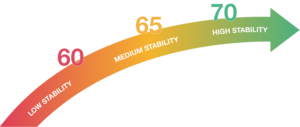
ISQ means Implant Stability Quotient and derives from Herz since the technique we use is Resonance Frequency Analysis (RFA). The scale in Herz is non-intuitive and hard to communicate so it was translated to a scale of ISQ 1-99, more than 20 years ago. Today we know that the scale correlates to micro mobility and that high stability means > 70 ISQ, between 60-69 is medium stability and < 60 ISQ is considered as low stability.

What is an ISQ value?

ISQ (Implant Stability Quotient) is a numerical value from 1 to 99 that describes implant stability. It is calculated from the resonance frequency measured when the Osstell instrument sends a magnetic pulse to a SmartPeg attached to the implant, translating this into a clinically intuitive value.
 

What ISQ value should I have before loading?

There is no single ISQ value that determines when an implant can be loaded. The decision depends on the stability over time (the ISQ trend), as well as clinical judgement and patient-specific risk factors.
As a general guideline, higher ISQ values provide greater confidence, and values around 70 or above are often considered suitable for loading non-splinted implants. For splinted restorations, lower values may be acceptable.
For guidance on how to interpret ISQ values, see the Osstell ISQ Scale.

Why do I need to take two measurements at the same occasion?

ISQ should always be measured in two directions, because implant stability can vary depending on the amount of surrounding bone in different directions. Measuring from two angles ensures that both the most and the least stable directions are captured.
To do this, take one measurement in the buccal-lingual direction and one in the mesial-distal direction. These two ISQ values represent the different stability directions. Sometimes the values are identical; sometimes they differ.
If the two measurements differ, always rely on the lowest ISQ value, as it reflects the weakest direction and therefore provides the most clinically relevant information about implant stability.

There is no single ISQ value that determines suitability for immediate loading. In addition to the ISQ value, the decision depends on primary stability, clinical judgement, and patient-specific risk factors.
As a general guide, higher ISQ values indicate greater stability, and values around 70 or above may support immediate loading in appropriate cases.
For guidance on interpreting ISQ values, see the Osstell ISQ Scale.

Are there any studies that prove the Osstell method?

There are currently thousands of articles where Osstell was used in the study, published in scientific papers. These abstracts could be found in our searchable database under “Resources/Scientific database“.

The Osstell ISQ scale is based on outcomes from these studies, all performed using Osstell instruments and aluminium SmartPegs.

What does Osstell measure?

Osstell measures the lateral stability of the implant and thereby indirectly the degree of osseointegration. The results are presented as an ISQ, ranging from 1-99 ISQ, which correlates to micro mobility.

How does the Osstell technology work?

Osstell measures implant stability using Resonance Frequency Analysis (RFA). The small SmartPeg that you attach to the implant has a tiny magnet on top. When the probe sends magnetic pulses, the SmartPeg starts to vibrate – similar to a very small tuning fork.
How it works:

  1. The instrument tip sends magnetic pulses
    These pulses make the SmartPeg vibrate without touching it.
  2. The vibration changes depending on how stable the implant is
    – A stable implant (good bone support) makes the SmartPeg vibrate faster.
    – A less stable implant makes it vibrate slower.
  3. The device converts this vibration into an ISQ value
    – Higher stability → higher frequency → higher ISQ
    – Lower stability → lower frequency → lower ISQ

It takes less than a second, and the ISQ value is shown immediately.

What is the difference between RFA and DCA (Periotest) measurements?

Periotest (DCA) measurements are designed for natural teeth, which are connected to the bone via the periodontal ligament. In contrast, dental implants are anchored directly to the bone without a periodontal ligament.
RFA measurements using Osstell instruments assess implant stability by measuring the stiffness of the bone–implant interface. They provide an objective and repeatable value on a more sensitive scale, supporting reliable assessment over time.

What is the difference between ISQ and torque?

Torque is a one-time, static measurement taken at implant placement and cannot be repeated later without risking the implant’s osseointegration. It reflects the rotational friction between the implant surface and the bone, rather than the lateral stability of the implant.
Measuring implant stability with Osstell instruments assesses the lateral stability of the implant. These measurements are contact-free and can be repeated over time to monitor the development of osseointegration.

What is the difference between ISQ and BIC?

ISQ and BIC measure different aspects of implant integration.
BIC (bone-to-implant contact) describes the percentage of the implant surface in contact with bone at a microscopic level, while ISQ reflects implant stability by measuring the stiffness of the bone–implant interface.

As a result, high BIC does not always mean high stability, as bone quality and stiffness also play a key role.

For a more detailed explanation, see: How ISQ correlates to torque

Does the way the SmartPeg is tightened affect the ISQ value?

Yes. The ISQ value can be affected if the SmartPeg is not mounted correctly.

For accurate measurements, the SmartPeg should be attached finger tight using the SmartPeg Mount, which corresponds to about 4–6 Ncm.

At this level, the SmartPeg has firm, stable contact with the implant, and the resulting ISQ value is consistent – typically within ±2 ISQ units.

  • If the SmartPeg is not fully seated:
    The contact becomes unstable, and the ISQ value can appear artificially low, or you don’t receive any value.
  • If too much force is applied:
    Overtightening does not improve accuracy. It may damage the SmartPeg threads.
    – A reusable SmartPeg may be damaged so it cannot be used again.
    – A single use or reusable SmartPeg may have its threads deformed, which can lead to inaccurate measurements during that session or, in worst case a broken SmartPeg.

In short: finger tight (4–5 Ncm) is enough to ensure stable contact and reliable ISQ readings.

What should I do if no ISQ value is displayed?

If no ISQ value appears, it usually means the SmartPeg’s vibration is not being detected clearly by the instrument. Several factors can cause this, and most are easy to resolve:

  1. Distance to instrument is too great
    The instrument should normally be held 2–4 mm from the magnet on top of the SmartPeg. Do not touch the magnet. If no value appears, move the instrument closer until the signal is detected.
  2. Angle needs adjustment
    The magnetic field is directional, so the orientation of the instrument matters. Measurements should be taken at approximately a 45° angle relative to the top of the SmartPeg.
  3. Ensure you have the correct SmartPeg Type for the specific implant
    Use this link to find the correct SmartPeg Type: Find my SmartPeg
  4. Soft tissue damping
    Surrounding tissue can sometimes dampen the vibration more than expected. Holding the instrument a bit closer usually compensates for this.
  5. The implant platform is not clean
    Ensure the implant platform is clean and free of debris, so the SmartPeg seats properly and transmits its vibration.
  6. The SmartPeg is worn or damaged
    • If you are using a reusable SmartPeg, make sure it has been inspected before use and that it is within 20 reprocessing cycles. A reusable SmartPeg that is worn out, bent, or has damaged threads will not vibrate correctly — and the instrument may not be able to pick up a reading.
    • A single‑use SmartPeg is intended for one treatment session only.
    • Ensure the SmartPeg is properly seated on the implant and that it is not in contact with surrounding tissue, as this can prevent accurate signal detection and may result in no ISQ value or an incorrect one.
  7. Electromagnetic interference
    Strong electromagnetic noise sources nearby may disturb the measurement. (See the FAQ on “Electromagnetic noise” for details.)

What is the lowest ISQ value typically observed?

Clinically, the lowest ISQ values typically seen are around 40.

If the stability is below 30, the implant is generally considered to have very low stability or to be loose. It may also indicate that the SmartPeg is not correctly mounted on the implant.

Very low values (below 20) are rarely seen in clinical situations and are more commonly observed in laboratory models with artificially low stability.

When should I measure implant stability?

Implant stability can be measured at different stages of treatment.
It is typically measured at implant placement to establish a baseline, and then during healing to monitor changes in stability and osseointegration. A final measurement is often taken before loading to support the decision.
Repeated measurements over time provide valuable information, as the trend in ISQ values helps guide clinical decisions.